 Home
Home
Spirituality
Holi and Holika Dahan: Real Meaning, Story & Significance
Published On: March 2, 2026
There is a story related to Holika Dahan, which is why we burn the Bonfire. In many videos, you might have seen Gurukul Students and Saints celebrating Holi with a bonfire at the centre. Why do we light that fire? What does it symbolise?
Long ago, the demon king Hiranyakashipu wanted revenge after his brother was killed by Varaha, an incarnation of Vishnu. Through intense penance, he gained immense power. Fearing another demon’s birth, Indra kidnapped his pregnant wife, Kayadu, but Narada intervened and took her to his ashram, where he gave satsang. Though Kayadu was uninterested, the child in her womb listened—this child was Prahlad.
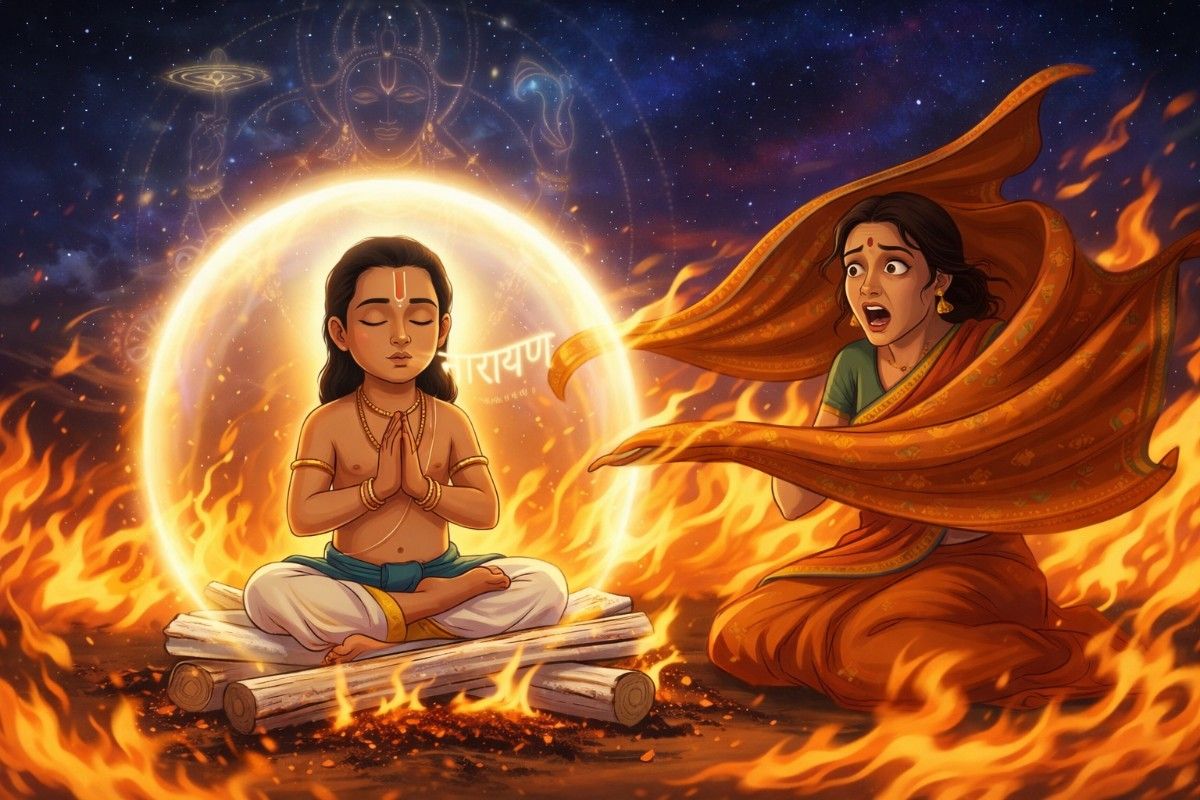
Absorbing devotion before birth, Prahlad was born chanting “Narayan” and became a steadfast devotee of Bhagwan Vishnu. Despite many attempts by Hiranyakashipu to kill him—by cliffs, snakes, and imprisonment—Prahlad remained unharmed. He never asked for protection; his faith alone protected him.
Finally, Hiranyakashipu’s sister Holika, who was immune to fire while wearing a special garment, sat in flames with Prahlad. It is said that a true devotee under God’s refuge cannot be harmed in any way. As protection, a strong wind blew the garment onto Prahlad, causing Holika to burn while he survived. This event is remembered as Holika Dahan.
In the end, when Hiranyakashipu challenged him again, Bhagwan Narasimha appeared from a pillar and killed the demon king, ending his reign.
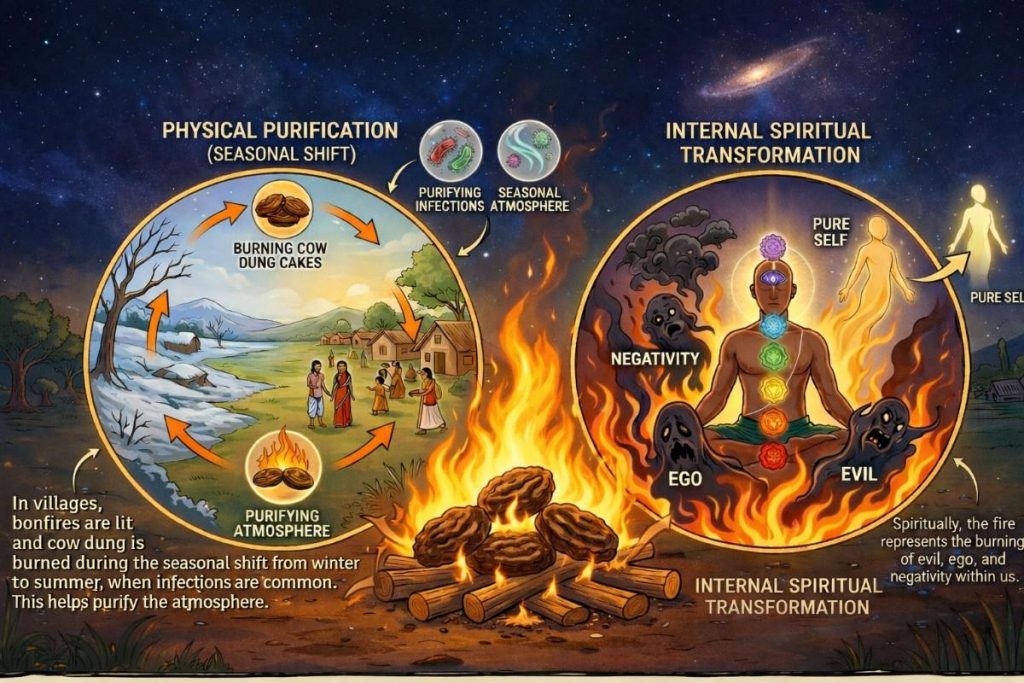
In villages, bonfires are lit, and cow dung is burned during the seasonal shift from winter to summer, when infections are common. This helps purify the atmosphere.
Spiritually, the fire represents the burning of evil, ego, and negativity within us.
Holi is one of the most colourful and widely celebrated festivals. People enjoy it with excitement, but many do not fully understand why we celebrate it, what it represents, and the powerful stories behind it. Holi is not just a festival of colours, but a celebration of victory of good over evil and devotion over ego. It reminds us to cleanse our hearts, strengthen our faith, and fill our lives with divine love. When celebrated with understanding, Holi becomes a path toward inner transformation and spiritual growth.
Let us understand through 2 important stories.
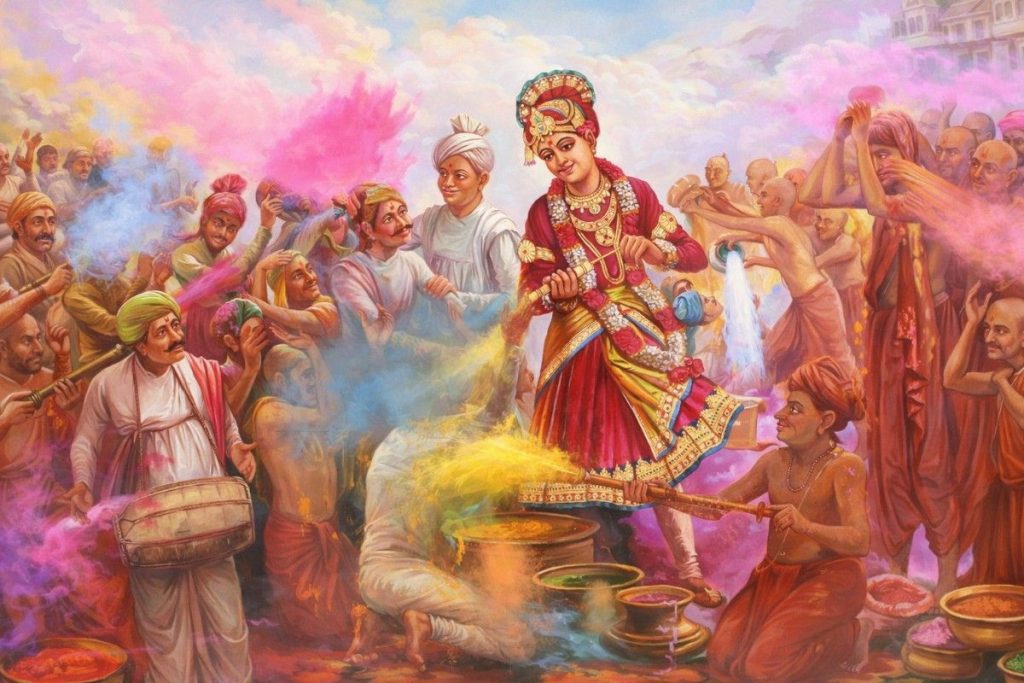
Bhagwan Swaminarayan celebrated Holi in many places. One famous celebration took place in Sarangpur after Jiva Khachar invited Him.
Natural colours were prepared from kesuda flowers. Water tanks were filled, and saints and devotees gathered with pichkaris. Maharaj even had a golden water gun.
Two groups were formed:
Even heavenly gods gathered to witness the celebration.
Saints such as Brahmanand Swami and Nityanand Swami focused on splashing colour on Maharaj. Eventually, the saints gained the upper hand, and Maharaj climbed a tree.
Brahmanand Swami caught His feet and asked Him to accept defeat. According to the rule, the losing leader had to grant a boon. Maharaj happily accepted, saying His victory lies in the victory of His devotees.
After bathing, everyone gathered under a neem tree. Maharaj, dressed in white yet covered in colours, appeared divine.
When offered a boon, the saints did not ask for wealth or comfort. They prayed only for:
This teaches us that true devotion, humility, and selfless love are more valuable than material gains or personal pride.
There are many wonderful and mesmerising kirtans composed when Maharaj had taken part in playing Holi. Some of them are Kunwar Kanaiyo Khele Hori, composed by Muktanand Swami and Hori Ai Re Ai Re by Premanand Swami.
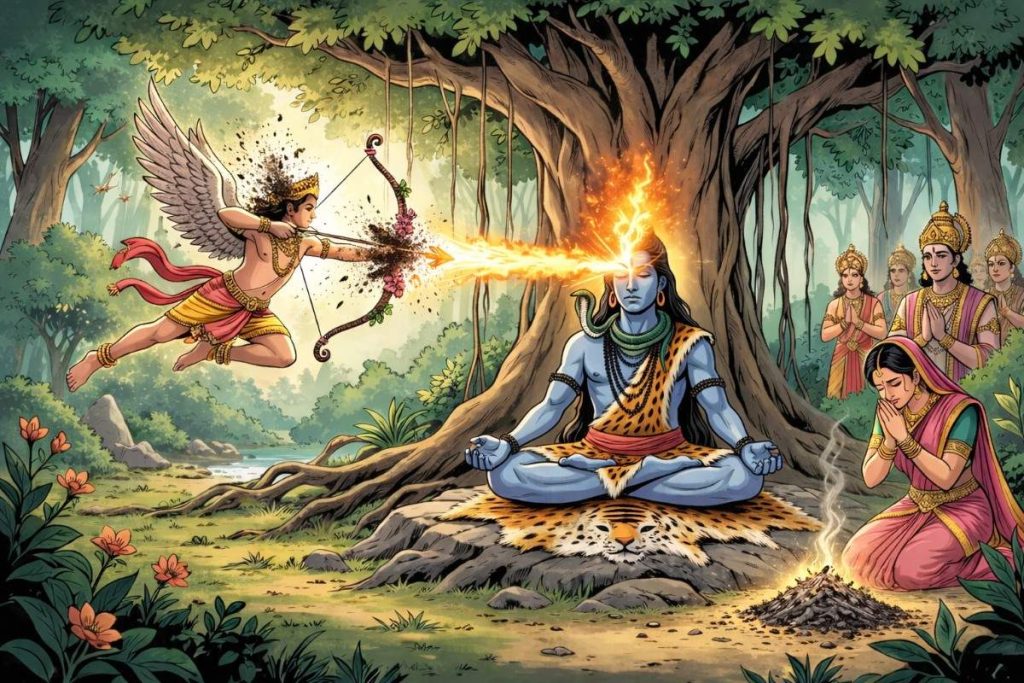
The demon Tarkasur had a boon that only a son of Lord Shiva could defeat him. At that time, Shiva was in deep meditation after the death of Sati, while Parvatiji (Sati’s rebirth) was performing penance to marry Him again.
To break Shiva’s meditation, Indra Dev sent Kamdev, the god of love. Kamdev created a spring-like atmosphere at Kailas with music, fragrance, and beauty. Hidden behind a tree, he shot flower arrows at Shiva.
Shiva opened His third eye in anger, and fire emerged, burning Kamdev to ashes.
Later, Kamdev’s wife Rati pleaded for mercy. Shiva blessed that Kamdev would continue to exist, but without a physical body, remaining as desire within the mind.
The third eye symbolises alertness. If we stay vigilant, we burn desire. If not, desire burns us.
The Holi fire reminds us to burn lust, anger, and worldly distractions.
Holi is not just about colours and enjoyment.
Prahlad teaches unwavering faith.
Shiva teaches alertness against desire.
Bhagwan Swaminarayan teaches us about divine love and devotion towards God.
The bonfire represents burning inner negativity.
True Holi is not just a celebration. It is purification, vigilance, and devotion.
Holika Dahan symbolizes the victory of righteousness over evil. Spiritually, it represents burning inner negativity, ego, anger, and harmful desires, allowing purity and devotion to rise within us.
The bonfire commemorates the burning of Holika and the protection of Prahlad. It also marks seasonal change and symbolizes purification — both physically and spiritually.
Prahlad was a devoted follower of Bhagwan Vishnu, despite his father Hiranyakashipu’s hatred toward God. Holika, who had protection from fire, tried to burn Prahlad but was destroyed instead, while he remained unharmed due to his unwavering faith.
Hiranyakashipu attempted to kill Prahlad in several ways — throwing him from cliffs, exposing him to snakes, imprisoning him, and ultimately placing him in fire. However, Prahlad’s devotion protected him each time.
Bhagwan Narasimha appeared to uphold dharma and protect His devotee. He demonstrated that divine protection transcends all conditions and that arrogance and tyranny ultimately fall before truth.
The burning of Holika teaches that evil intentions, pride, and misuse of power lead to destruction. True faith, humility, and righteousness always triumph.
No, Holi’s real purpose is spiritual and social harmony. Misusing it to harm others or cause damage goes against the festival’s true teachings.
The story highlights self-control and awareness. Shiva’s third eye represents vigilance — reminding us that unchecked desires can consume us, but awareness can burn negative impulses.
The playful splashing of colors represents joy and equality, but excessive harassment or inappropriate behavior is a modern distortion, not part of the original stories or customs.
No, Holi spiritually teaches controlling desires. Stories like Kamdev and Shiva show that true celebration involves burning inner temptations, anger, and ego, not indulgence.

Good artical, thanks for bringing this…
Leave a Reply