 Home
Home
Spirituality
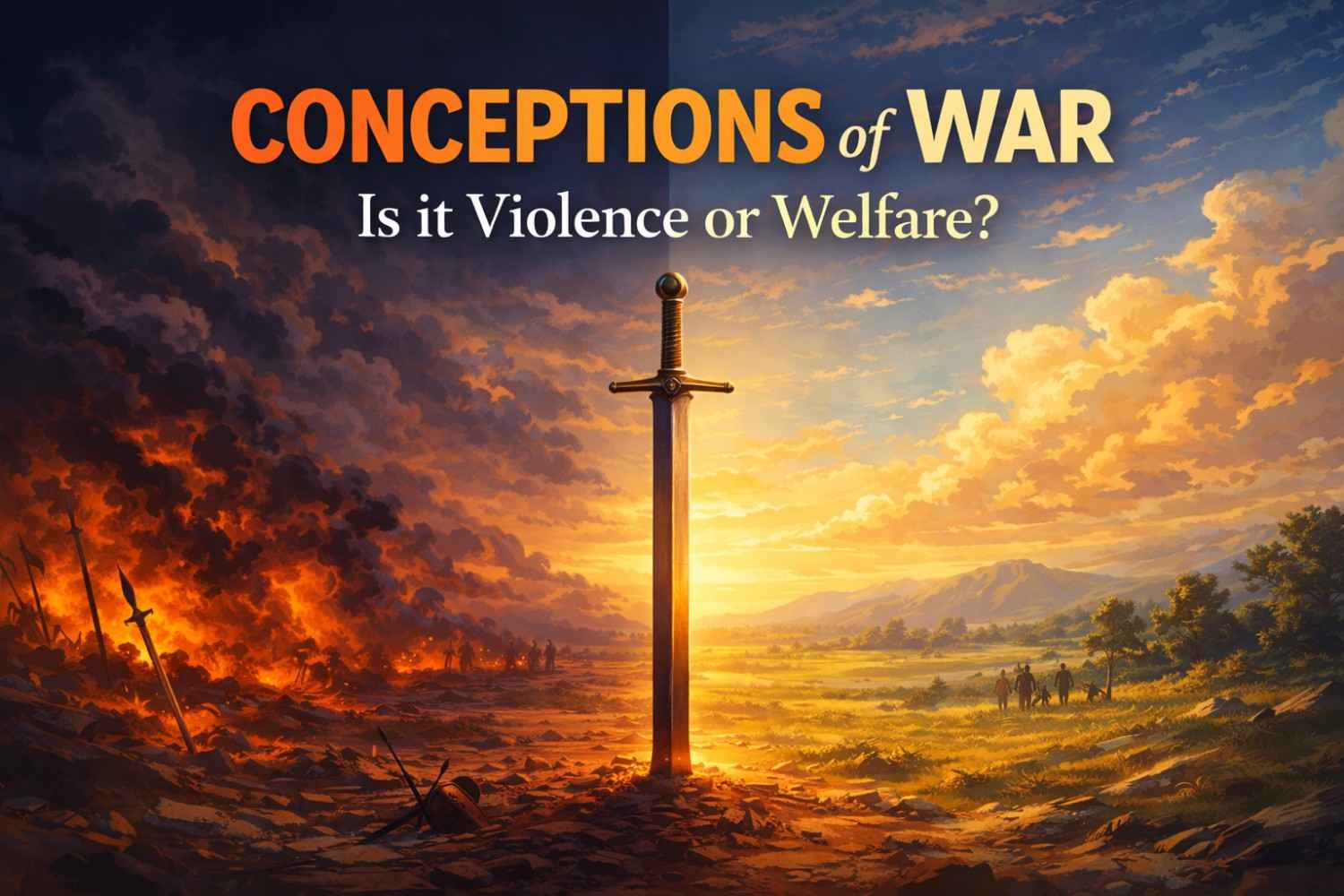
Conceptions of War: Is it Violence or Welfare?
Published On: March 7, 2026
, Updated on : March 10, 2026
Righteous war in Hinduism is a complex concept that raises an important question: is war merely an act of violence, or can it sometimes serve the welfare of society and the protection of dharma?
In today’s world, the question feels heavier than ever: Is war pure violence, or can it ever be an act of welfare?
On one side, war brings death, widows, orphans, and destruction. On the other side, history and scriptures show divine battles fought for justice and protection.
In the Shikshapatri, Bhagwan Swaminarayan clearly states that non-violence is the highest dharma. Yet, our sacred history is filled with wars led by God Himself.
So how do we understand this contradiction?
To answer this properly, we must examine war through the lens of scripture and spirituality, not just modern political narratives.
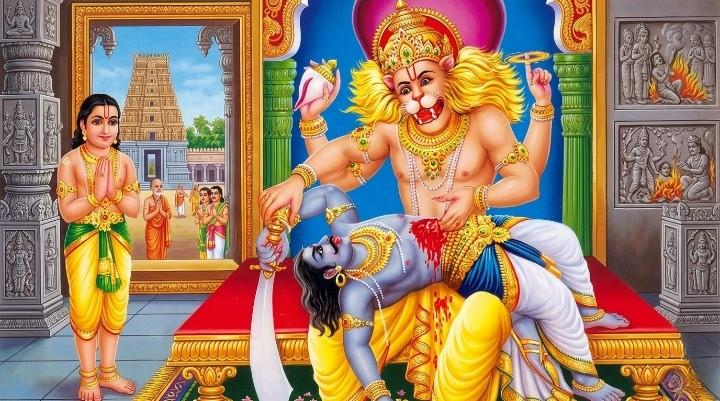
The ten principal incarnations of God did not descend to Earth merely to give peaceful advice. Most appeared when dharma declined, and adharma dominated, and they acted decisively.
These wars were not acts of cruelty. They were acts of protection, justice, and restoration. When performed by God to eliminate evil and safeguard the innocent, such actions are considered welfare for humanity.
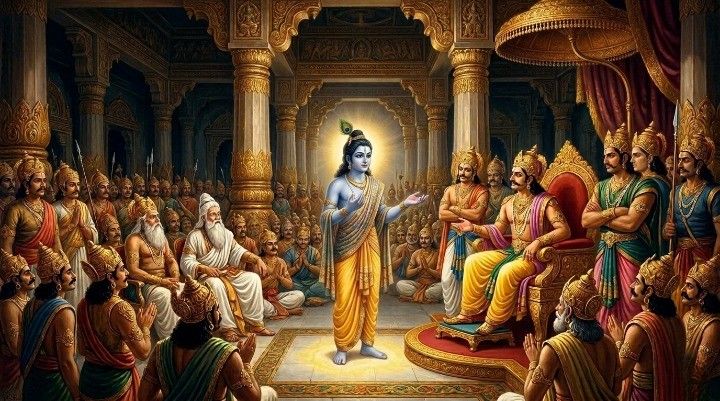
The Mahabharata presents one of the most intense examples of righteous conflict.
Driven by Duryodhana’s ego, the 18-day war involved nearly 48 to 50 lakh warriors. In the end, only eight survived. A literal river of blood flowed through Kurukshetra.
Yet the war was not immediate. Krishna attempted peace multiple times before the battle became unavoidable.
Similarly, in the Ramayana, Rama fought for 13 days to rescue Sita Ji. Some argued that one woman was not worth a massive war. But for Rama, protecting honour and righteousness was non-negotiable.
These examples show that war was never the first option. It became the final option when injustice crossed all limits.
Not all wars are equal.
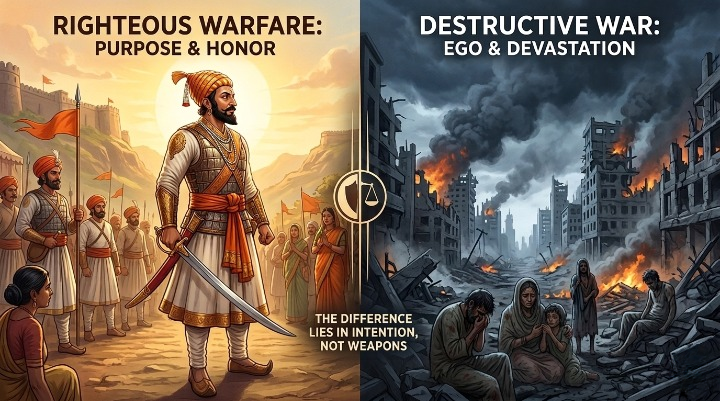
Chhatrapati Shivaji Maharaj demonstrated that one can fight without losing character. After one victory, when a Mughal queen was brought to him as a “gift,” he rebuked his commander and ordered that she be returned with full respect. For him, dignity and values mattered more than triumph.
Contrast this with World War II, which claimed around 78 lakh lives. It was largely driven by Adolf Hitler’s ego and hunger for domination.
The atomic bombings of Hiroshima and Nagasaki killed approximately 2.1 lakh civilians. These acts are widely viewed as demonstrations of power rather than acts rooted in moral righteousness.
The difference lies not in weapons, but in purpose.
The real conclusion is simple yet profound:
Violence or welfare does not depend on the action itself — it depends on the intention behind it.
War can be considered righteous when:
In such cases, the action is seen as punya — a duty aligned with righteousness.
War becomes sinful when:
The same weapon can be used by a soldier or a terrorist. One is honoured, the other condemned. The difference is intention.
The true causes of war are not external nations or borders.

They are internal enemies:
These forces, when uncontrolled, become more dangerous than any army.
Until the human heart is purified, global peace will remain fragile.
Lasting peace cannot be achieved through weapons alone.
Bhagwan Swaminarayan emphasised the spread of Sadvidya (spiritual knowledge) and Brahmavidya. When spiritual values are taught alongside modern education, society produces leaders who are powerful yet principled.
Institutions like the Swaminarayan Gurukul system aim to develop strong, disciplined, and spiritually aware individuals who can guide the world toward true welfare — without unnecessary violence.
War, by itself, is neither automatically righteous nor automatically evil.
It becomes welfare when rooted in selflessness and justice.
It becomes violence when fueled by ego and greed.
In the end, the battlefield outside is only a reflection of the battlefield within.
Righteous war in Hinduism refers to a conflict fought for the protection of dharma, justice, and innocent lives. Scriptures like the Mahabharata describe such wars as a duty when all peaceful options fail.
War is not automatically sinful in Hinduism. According to the concept of righteous war in Hinduism, conflict becomes acceptable when the intention is to protect righteousness and prevent injustice.
Krishna supported the battle because it represented righteous war in Hinduism, where fighting became necessary to restore dharma after all peaceful negotiations had failed.
War becomes violence when it is driven by ego, greed, or the desire for domination. The teachings of righteous war in Hinduism emphasize that intention determines whether an action is righteous or sinful.
The difference lies in purpose. In righteous war in Hinduism, the goal is justice and protection, whereas violence is driven by selfish motives such as power or revenge.
Leave a Reply